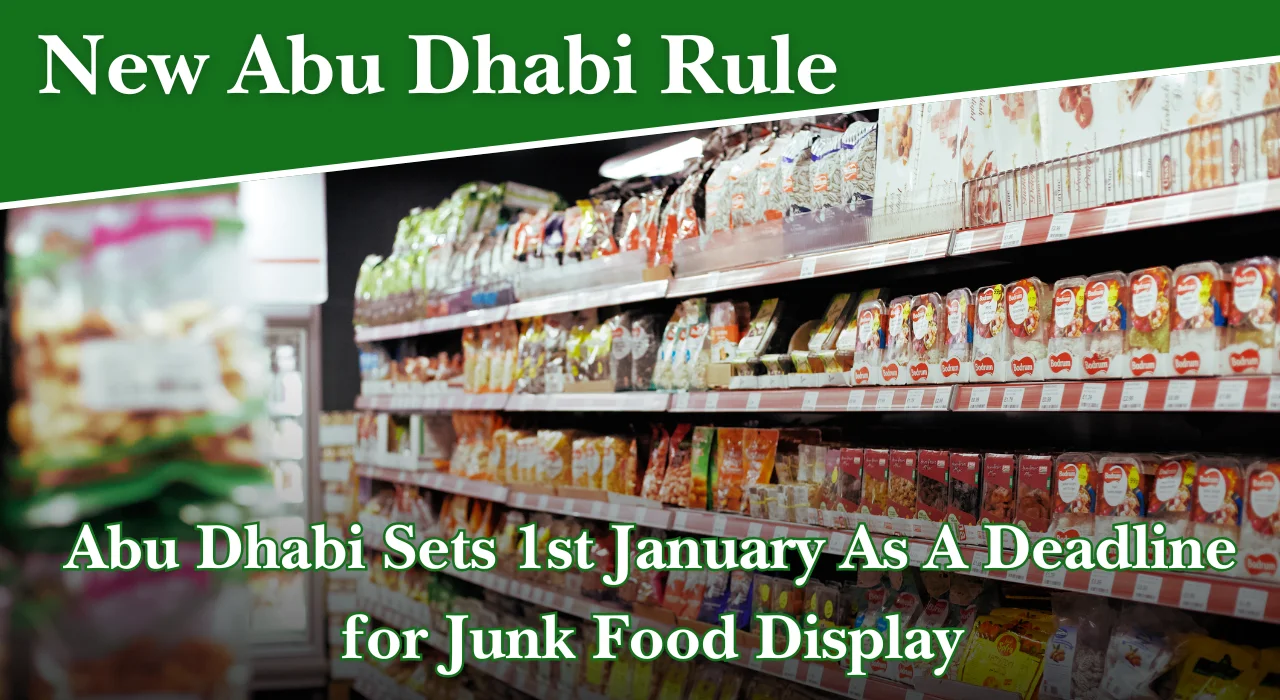
Abu Dhabi Sets 1st January As A Deadline for Junk Food Display
Abu Dhabi is introducing a major public health measure that will change how supermarkets and grocery stores display certain food products.
Under a new policy announced by the health authorities, retailers must move foods high in fat, salt, and sugar away from prominent locations such as checkout counters and store entrances by 1st January 2027.
For supermarket operators, retailers, and residents, understanding the new requirements before the deadline is important. Khaleej Buzz explains the latest rules, who they apply to, and what shoppers can expect when visiting stores across Abu Dhabi.
Why Abu Dhabi Is Introducing the New Display Rules
The policy forms part of Abu Dhabi’s wider strategy to improve public health and reduce the impact of diet-related diseases.
Research has shown that placing sweets, sugary drinks, chocolates, and other unhealthy snacks in highly visible areas often encourages impulse buying. By changing product placement instead of restricting sales, authorities aim to create shopping environments that support healthier decisions.
The initiative particularly focuses on protecting children and encouraging families to make more balanced food choices.
What Is the 1st January 2027 Deadline?
Retail businesses in Abu Dhabi have until 1 January 2027 to fully comply with the new display requirements.
From this date, supermarkets and other affected retailers should no longer display foods classified as high in fat, salt, or sugar in prime promotional locations.
The transition period gives businesses time to:
Which Products Are Affected?
The policy mainly targets products considered high in fat, salt, or sugar, often referred to as HFSS foods.
Examples may include:
Retailers are expected to follow the official nutritional standards issued by Abu Dhabi authorities when determining which products fall under the policy.
Also Read: UAE Offers Free Tourist Visas for Children
What Will Still Be Allowed?
The new rules do not ban the sale of junk food.
Customers will still be able to purchase these products from regular shelves within supermarkets.
Retailers may continue selling them provided they comply with the updated display requirements and other applicable regulations.
This means shoppers will still have access to their preferred snacks but may need to look for them in standard product aisles instead of prominent locations.
Where Can These Products No Longer Be Displayed?
The rules focus on locations that attract the highest customer attention rather than banning products completely.
Checkout Counters
Products covered by the policy should no longer be placed beside payment areas where shoppers often make last-minute purchases.
Store Entrances
Retailers will be required to avoid displaying unhealthy food immediately inside store entrances or other prominent entry points.
End-of-Aisle Promotional Displays
Highly visible promotional shelving used for impulse buying will also be affected where applicable under the policy.
Online Shopping Platforms
The policy also extends to digital retail. Certain unhealthy foods should not receive preferential placement through featured promotions or highlighted product displays on supermarket websites and mobile applications where the regulations apply.
Also Read: Why UAE Shoppers Still Buy Single-Use Plastic Bags
Businesses Affected by the Policy
The requirements mainly apply to retail businesses involved in food sales, including:
Individual businesses should review the official guidance to understand how the rules apply to their operations.
How the New Rules Could Affect Shoppers
For most customers, the shopping experience will remain familiar, although some noticeable changes are expected.
Fewer Impulse Purchases
Without sweets and snacks beside checkout counters, shoppers may be less likely to buy extra items they had not planned to purchase.
Greater Visibility for Healthier Foods
Prime display areas may instead feature products such as:
Better Support for Families
Parents may find it easier to shop with children when confectionery is no longer placed directly beside payment areas.
What Retailers Should Do Before the Deadline
Businesses have several months to prepare before the policy comes into effect.
Review Current Store Layouts
Identify checkout displays, promotional islands, entrance shelving, and other prominent locations currently used for HFSS products.
Update Product Placement
Move affected products to standard shelving while ensuring healthier alternatives receive greater visibility where required.
Train Store Employees
Employees should understand:
Work With Suppliers
Retailers may need to coordinate with suppliers regarding promotional displays and marketing materials that no longer meet the updated requirements.
Potential Benefits of the Policy
The initiative is expected to provide several long-term benefits.
| Benefit | Expected Impact |
| Healthier shopping environments | Supports informed food choices |
| Reduced impulse buying | Encourages planned purchases |
| Better child nutrition | Less exposure to unhealthy snacks at checkouts |
| Public health improvements | Supports healthier lifestyles |
| Consistent retail standards | Creates clearer merchandising guidelines |
Challenges Retailers May Face
Although the policy offers health benefits, businesses may experience some operational adjustments.
Possible challenges include:
Many retailers are expected to use the transition period to minimise disruption before the January 2027 deadline.
Timeline of the New Policy
| Date | Development |
| July 2026 | New policy announced |
| 2026 | Retailers begin preparations |
| 1 January 2027 | Compliance deadline takes effect |
Conclusion
Abu Dhabi’s decision to introduce a 1 January 2027 deadline for changing junk food displays represents an important step towards creating healthier retail environments. Rather than limiting consumer choice, the policy focuses on reducing the influence of prominent product placement that often encourages impulse buying.
For retailers, the transition period provides an opportunity to review store layouts, update merchandising practices, and prepare staff before the new requirements become mandatory
FAQs
When does the new rule take effect?
Retailers are expected to comply by 1 January 2027.
Does Abu Dhabi ban junk food sales?
No. The policy changes where certain products are displayed rather than banning their sale.
Which foods are affected?
Products classified as high in fat, salt, or sugar under the official criteria are covered by the policy.
Will supermarkets remove chocolates completely?
No. They may continue selling them, but they should no longer be displayed in specified high-visibility locations.
Does the policy apply to online supermarkets?
Yes. The policy also includes certain online product placement and promotional practices where applicable.